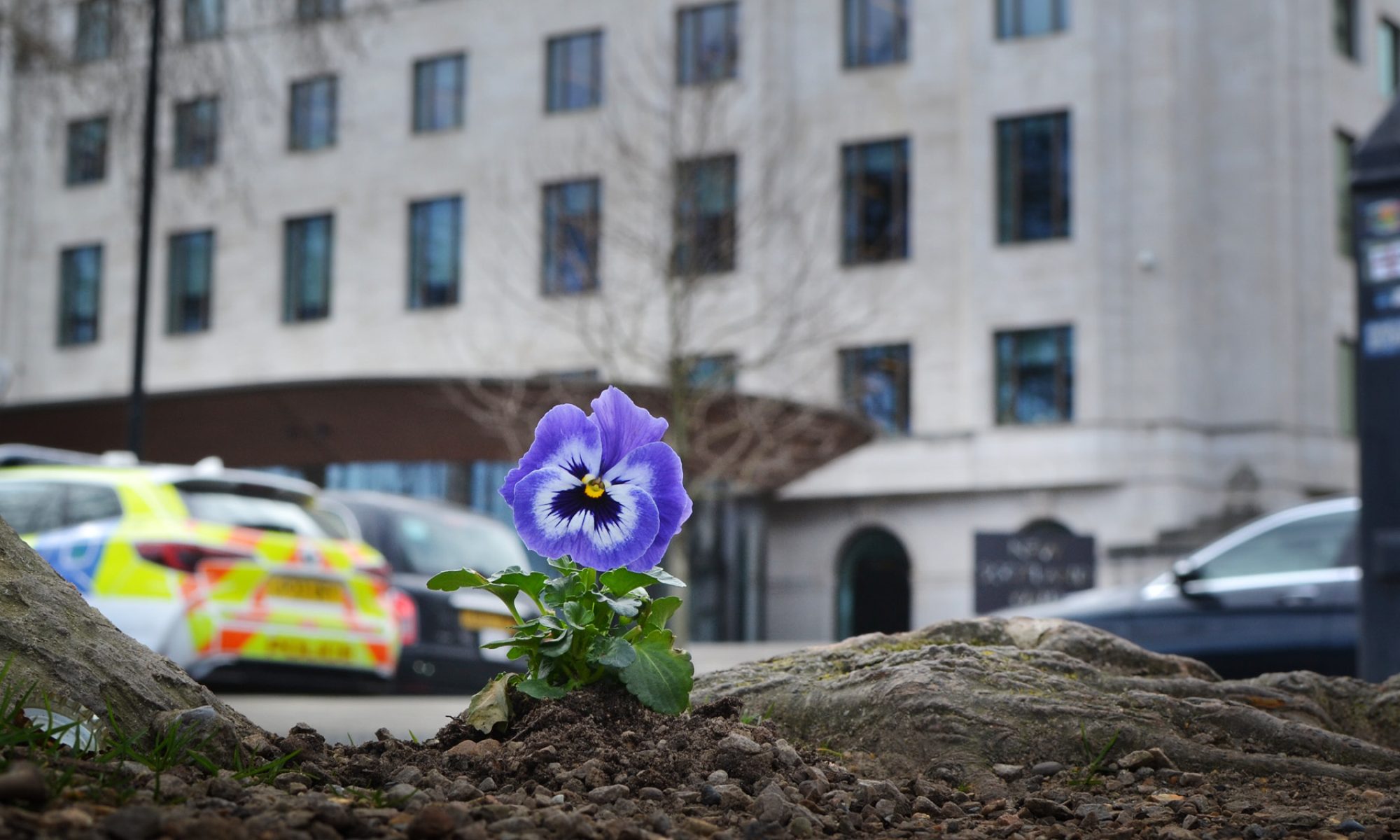


Bio:
Paul Harfleet (he/him) is a British, London based queer artist that has been making work since he graduated from an Ma in Fine Art at the Manchester School of Art in 2004. He developed The Pansy Project in 2005 and moved to London in 2009 where he continues to practice as an artist whilst earning a living as an illustrator and designer. In 2020 he began a new project exploring the cultural history of ornithology, the project known as Birds Can Fly can be explored here. Both projects run simultaneously, you can contact the artist here for further enquiries and more on recent exhibitions here.
Further Context:
The plantings remain the core of The Pansy Project, though Harfleet has created other ways of sharing the conceptual story of The Pansy Project over the years, from eco-friendly merchandise, to a jewellery collaboration with Tatty Devine. In 2010 Paul collaborated with his brother Tom to create the Gold Medal winning Pansy Project Garden at the RHS Hampton Court Palace Flower Show. In 2017 he wrote and illustrated ‘Pansy Boy’, a children’s picture book that was short-listed for the Polari First Book Prize. In 2022 The Pansy Project was showcased by Cheddar Gorgeous on Ru Paul’s Drag Race UK, highlighting The Pansy Project to a new global audience. Since 2005 The Pansy Project has featured in many publications and on screen.
How The Pansy Project Began by Paul Harfleet

“Fucking Faggot!” Upper Brook Street, Manchester, 2005
“A string of homophobic abuse on a warm summer’s day was the catalyst for this project. The day began with two builders shouting; “it’s about time we went gay-bashing again isn’t it?”; continued with a gang of yobs throwing abuse and stones at my then boyfriend and me, and ended with a bizarre and unsettling confrontation with a man who called us ‘ladies’ under his breath.
Over the years I have become accustomed to this kind of behaviour, but I came to realise it was a shocking concept to most of my friends and colleagues. It was in this context that I began to ponder the nature of these verbal attacks and their influence on my life. I realised that I felt differently about these experiences depending on my mental state so I decided to explore the way I was made to feel at the location where these incidents occur.
However, I did not feel it would be appropriate to equate my personal experience of verbal homophobic abuse with a death or fatal accident; I felt that planting a small unmarked living plant at the site would correspond with the nature of the abuse: A plant continues to grow as I do through my experience. Placing a live plant felt like a positive action, it was a comment on the abuse; a potential ‘remedy’.
The species of plant was of course vitally important and the pansy instantly seemed perfect. Not only does the word refer to an effeminate or gay man: The name of the flower originates from the French verb; penser (to think), as the bowing head of the flower was seen to visually echo a person in deep thought. The subtlety and elegiac quality of the flower was ideal for my requirements. The action of planting reinforced these qualities, as kneeling in the street and digging in the often neglected hedgerows felt like a sorrowful act.”

During the twentieth year of The Pansy Project Harfleet will continue to reflect on their memories of two decades of planting pansies at sites of homophobia, above and here. Joey Orr conducted an in depth interview for Antennae; The Journal of Nature and Visual Culture in 2020 and can be read here.

Explore the publications The Pansy Project has appeared in since 2005, here. In 2024 The Pansy Project featured in Rebel Garden an exhibition at Musea Brugge, Belgium, part of the Triënnale Brugge 2024, the work also appeared in the catalogue. Explore other exhibitions here.
